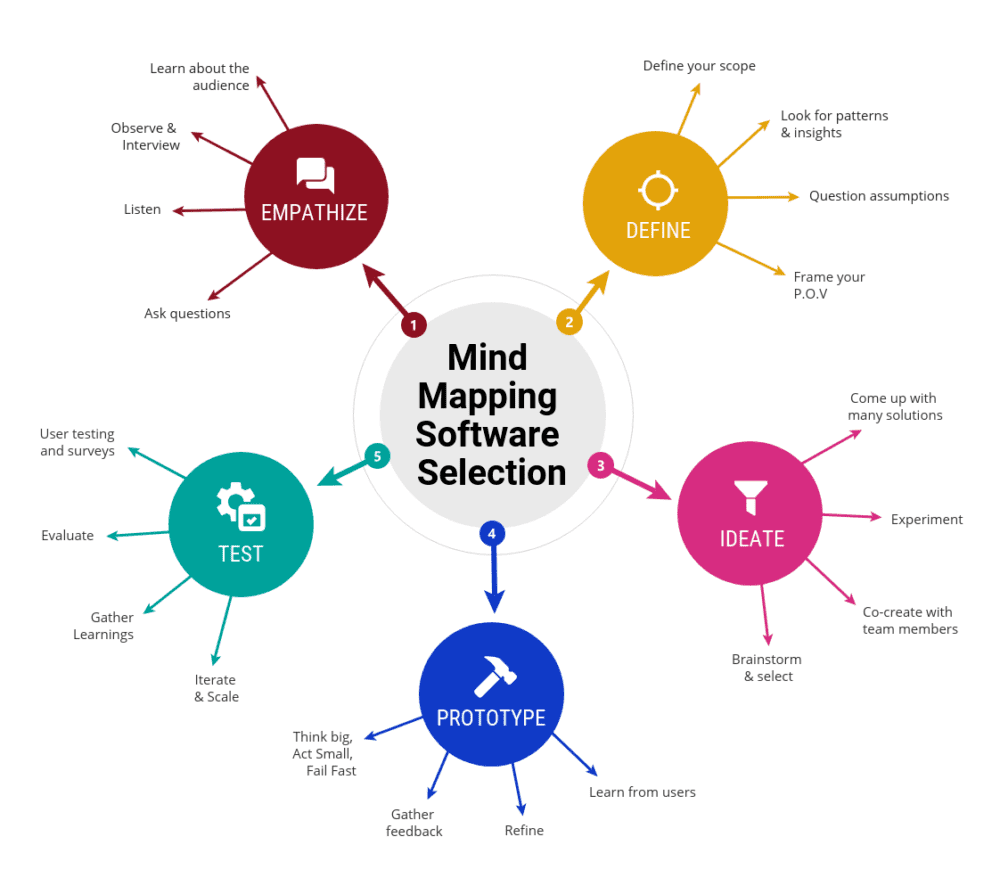
How Mind Maps Enhance Clarity and Creativity in Everyday Life
Mind maps are powerful visual tools that help individuals organize their thoughts and ideas clearly. By using a diagram to represent concepts and their relationships, mind maps enhance cognitive processing and retention. This not only aids in learning but also inspires creativity by allowing the brain to explore possibilities in a structured way. For instance, when brainstorming for a project, creating a mind map can lead to unexpected connections, making ideas flow more freely and efficiently. The process supports clarity by breaking down complex information into manageable parts, making it easier to see the bigger picture.
In everyday life, integrating mind mapping techniques can substantially improve decision-making and problem-solving skills. Whether planning a family vacation, organizing a work presentation, or tackling personal projects, mind maps allow individuals to visualize their objectives and strategies. By focusing on key points and branching out related ideas, users can prioritize tasks and ensure nothing is overlooked. Furthermore, frequent use of mind maps encourages a habit of structured thinking, fostering both clarity and creativity, making them an invaluable tool in personal and professional contexts.
The Science Behind Mind Mapping: Boosting Memory and Focus
Mind mapping is a powerful tool that enhances memory retention and concentration by utilizing the brain's natural ability to visualize and organize information. At its core, mind mapping involves creating a diagram that represents words, ideas, tasks, or concepts linked around a central theme. This method leverages our brain's preference for images and spatial relationships, making it easier to recall information. Research indicates that by incorporating colors, shapes, and visuals into note-taking, individuals can significantly improve their ability to remember details. The technique also promotes a deeper understanding of the material, as it encourages critical thinking and connections between concepts.
Additionally, employing mind maps can boost focus and productivity. By structuring thoughts in a clear and visually appealing format, individuals can avoid the overwhelm often associated with traditional linear note-taking. The dynamic nature of mind maps helps reduce cognitive load, allowing the brain to process information efficiently. To effectively create a mind map, consider these essential steps:
- Start with a central idea.
- Add branches for related topics.
- Use keywords and short phrases to keep it concise.
- Incorporate colors and images to enhance engagement.
Top 5 Mind Mapping Techniques for Effective Chaos Control
In today's fast-paced world, keeping our thoughts organized can feel like an overwhelming task. One effective way to achieve clarity and control amidst the chaos is through mind mapping. This technique allows you to visually organize information, making it easier to understand complex concepts and generate new ideas. Here are the Top 5 Mind Mapping Techniques for Effective Chaos Control that will help streamline your thoughts and foster creativity:
- Brainstorming Maps: Start with a central idea and branch out into related themes. This technique encourages free thinking and captures all ideas without judgment.
- Hierarchical Maps: Organize your thoughts by importance. Place your main concept at the top and categorize subtopics below, creating a clear structure.
- Flowcharts: Use flowcharts to depict processes or decision-making pathways. This method is ideal for understanding workflows and identifying critical points.
- Color-Coding: Incorporate color-coding into your mind maps to differentiate between ideas, topics, or priority levels. This visual cue enhances memory retention and makes your map more engaging.
- Digital Mind Mapping Tools: Leverage technology by using digital mind mapping software. These tools often come with templates and collaboration features, making it easy to create and share your maps.